
Generated artificial intelligence is becoming the new political object of the national security system of the Communist Party of China. The Financial Times on September 14, China's national security minister Chen Yin openly linked generated AI, deep counterfeiting and automated network manipulation with "political security, institutional security, ideological security".This statement is not a common technical risk hint, but puts artificial intelligence directly into the regime security framework: when AI can reduce the threshold of information production, translation, comparison and cross-platform dissemination, the Communist Party has long relied on content review, public opinion guidance and information stratification mechanisms also face new pressure.
原始来源 · ft.comChina's spy agency warns of AI risk to national security英国《金融时报》关于中国国家安全部长陈一新将AI风险与政治、制度及意识形态安全联系起来的报道。ft.com ↗From technological risks to regime security
The new expression raises AI risks from common issues such as fraud, data security, false content, to the level of "institutional security" and "ideological security".This change itself has political significance. For a regime that incorporates public opinion management into the national security system, the key threat of AI is not only that the content is false, but that ordinary users have the ability to generate and disseminate information at a lower cost. What the CCP national security system prevents is no longer a single platform or single account, but the spread of information production capacity itself.
This logic is in line with the expansion of network censorship, real-name systems, algorithm governance and platform responsibility systems over the past decade.The difference is that traditional censorship faces websites, media and social accounts; generated AI can immerse content generation capabilities directly into personal terminals, raising the cost of the original centralized filtering model.
*On the one hand, it needs AI competitiveness, and on the other hand it needs information to be controlled
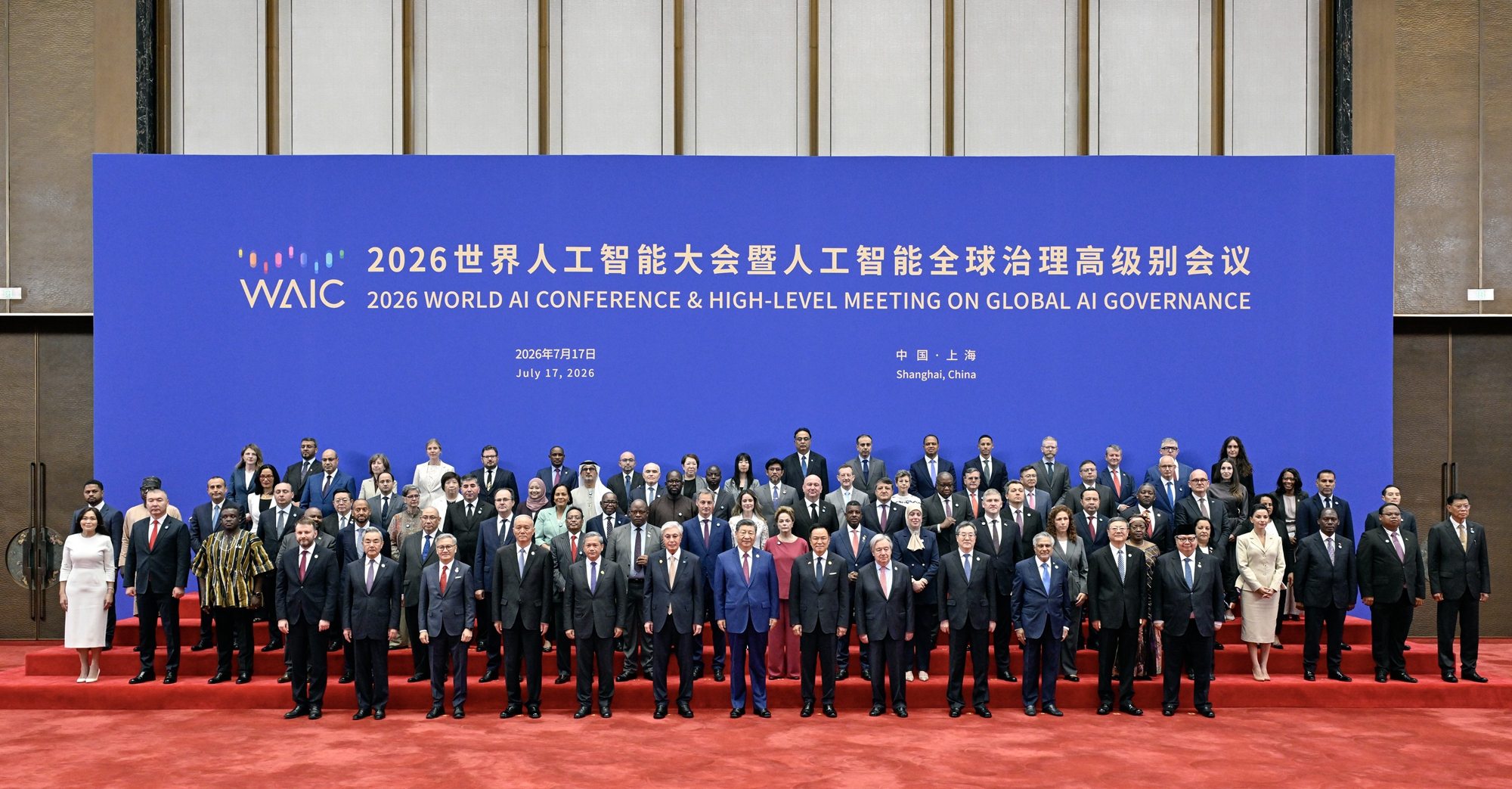
Beijing is also pushing for the AI industry.The 2026 World Conference on Artificial Intelligence held in Shanghai, China continues to emphasize the development of the AI industry, global governance and international cooperation. This forms an increasingly sharp institutional contradiction: China needs AI to boost economic, research, military and industrial competitiveness, but also fears that AI will weaken information monopoly and ideological control.
原始来源 · peoplesdaily.pdnews.cnChina sends fresh signal on global AI cooperation at WAIC2026世界人工智能大会相关公开报道。peoplesdaily.pdnews.cn ↗
The stronger the advanced models, the more cross-language retrieval, historical material comparison, document summary and content restructuring; these capabilities are valuable for the industry, but for governance systems that rely heavily on information boundaries, it also means more incomplete output.
The national security system is annexing technology governance
In the current governance structure of the Communist Party of China, "national security" is no longer just anti-espionage, anti-terrorism and border security concepts, but continuously expands to the economy, data, culture, education, the Internet and ideology.
The direct consequence of this expansion is that technology governance is increasingly subject to political security priorities. Enterprises face not only product compliance but also political responsibilities such as content filtration, model alignment, data retention and risk reporting. The boundaries of technological innovation are ultimately defined by security agencies, not by markets, research communities or independent legal procedures.
AI Anxiety Exposes Not Technical Issues, But Dominance Issues
From an independent media perspective, the most important thing about this so-called “AI security” discussion is not how many regulatory provisions the CCP will introduce, but it once again exposes the regime’s fundamental distrust of the independent flow of information. A system that puts “institutional security” and “ideological security” at the center of AI governance, the ultimate concern is not whether users can get more knowledge, but whether that knowledge is still within the boundaries of power control.
This is also the intrinsic conflict of China’s AI strategy: it wants to get the strongest technology, but is reluctant to accept the information opening effect of strong technology.Technology can be purchased, trained and deployed, but when a regime sees the ability to generate free information as a political risk, the technological progress itself is constantly frying with the mode of domination.
Beijing can continue to expand computing, modeling, and industrial investment, but the stronger the AI, the more apparent this structural contradiction will be as long as information control is still seen as part of regime security.
Article discussion
Verified members can discuss this report publicly and manage their own content.
Checking member sign-in status…