

China’s demographic reversal is entering county cities and countryside in a more intuitive way than the birth rate curve: primary schools once filled with tables, blackboards and children’s reading sounds have begun to shut down and withdraw due to the disappearance of birth sources, some of which have been converted into retreats, elderly dining rooms and day care centers.
The rate shown by the latest public data is not moderate. By 2025, the number of general primary schools in the country fell to 12,83 million, about 8,000 less than in 2024; compared to 2020, about 2,97 million less over five years. Primary school students fell from 10584,37 million in 2024 to 10,178,29 million in 2025, a yearly decrease of 406,08 million.
原始来源 · hunantoday.cn多地闲置小学改养老院:去年小学数量减少8000所第一财经报道中国小学数量、在校生变化及部分地区闲置校舍转作养老用途。hunantoday.cn ↗This means that China’s minorization has turned from a “future demographic problem” to an ongoing restructuring of public facilities. Where schools are closed, young families are shrinking, children’s populations are shrinking, and grassroots resource withdrawal leaves traces.
Five years less than 30,000 primary schools, disappearing not only school cards
The decline in the number of primary schools has multiple factors, such as urbanization, rural population migration and adjustment of school layout, but when the long-term decline in the birth population and the decline in the school age population overlap, the withdrawal of schools is no longer just as simple as concentrating students from several villages to central schools.
School means more than just educational services for a village or community; it determines the distance parents carry every day, affecting the willingness of young families to continue living, but also supports school buses, catering, tools, housing and small business networks formed around children.
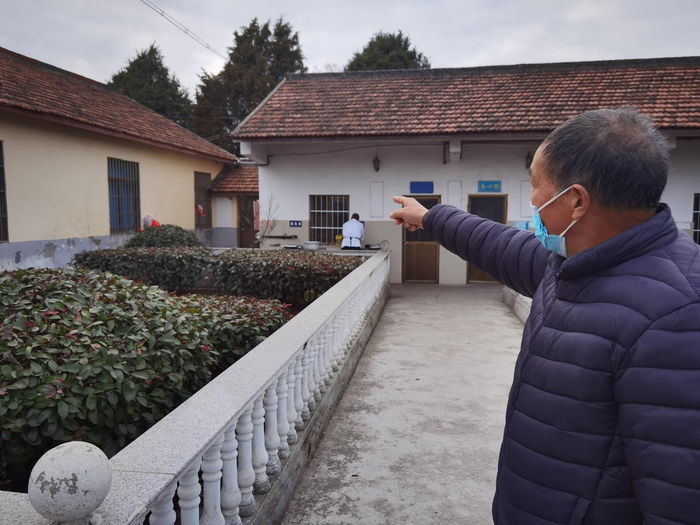
After the closure of a school, the first classroom disappears, followed by younger families. This creates a cycle between public service withdrawal and demographic loss: the fewer children, the fewer schools; the farther the school, the younger families are more reluctant to stay.
From the class table to the pension bed, a building that records the intersection of two generations of people
In some areas, vacant schools are being transformed into retirement facilities. In Jiangsu Shengdong and other places, the practice of using vacant villages and small-building retirement services sites has previously emerged. Similar transformation from the asset utilization point of view is not difficult to understand: school buildings have courtyards, have public spaces, and are also usually located inside villages, the transformation may be lower than the reconstruction of land.
原始来源 · k.sina.cn闲置村小改造养老服务设施资料公开报道中的闲置校舍再利用案例。k.sina.cn ↗But this change in usage has a strong demographic symbolism: The same public land, which used to serve more and more children, now needs to serve more and more elderly people.
This is not a change that can be summarized by the phrase “do what you can,” but rather, grassroots finance, education, and retirement resources must face a reversal in the population age structure.
A transformation of a primary school into a retirement home is not a problem in itself; the real question is, as this transformation becomes more and more widespread, is China ready to answer: How will those children who are no longer born, the young people who are constantly leaving, and the increasing number of the elderly who remain in their homes, redistribute the public resources of a society?
The cost of minorization is being transmitted from the education system to local finances
Students' reduction does not reduce the proportion of cost of education. Mountains, remote rural areas and sparsely populated areas still need basic education coverage, school maintenance, teacher preparation, transportation and accommodation conditions require funding. If the school is simply compressed according to the number of students, the cost may eventually turn into longer school distances for children and higher family time spending.
At the same time, aging requires local increases in public investments:
- pension institutions and community care facilities;
- food, medical and rehabilitation services for the elderly;
- long-term care for the disabled, semi-disabled elderly;
- security for the elderly living alone in the countryside;
- grass-roots healthcare and retirement services.
Therefore, some places are facing double fiscal pressures: to deal with the rapid shrinking of children’s education assets, and to create new services for the rapidly growing elderly population.
“School withdrawal” can’t be a low-cost demographic policy
In the face of a reduction in income, removal may indeed improve the resource efficiency of some schools, but if the policy only counts how many students are left in one school building, but does not count how much travel time children increase daily, whether families are forced to relocate, or whether the countryside has lost a smaller population last year, so-called efficiency may just transfer public costs to the family.
Particularly cautious is the fact that in fiscal-stressed areas, population reduction may simply be understood as “public services should also be reduced simultaneously” and that this logic eventually forms a self-enhancing: the fewer the population, the fewer the services; the fewer the services, the faster the demographic loss.
The real demographic crisis is not a negative growth figure in a statistical communiqué, but a place where young families are gradually losing the reason to stay.
How to use the school building next, local residents should participate in the decision
Unemployed schools belong to the public assets formed by long-term accumulation.The transformation into pensions, cultural activities centers, foster care facilities, community medical points or other public spaces may be reasonable, but the choice of use should not be determined only by the efficiency of the asset disposal.
At least a few questions should be answered publicly: to whom the property belongs, where the refinancing comes from, whether the original educational use does not really regain demand, whether pension programs are run by government or commercial institutions, whether local residents can use equally, and whose accounts the income from asset management eventually enters.
If land and buildings quickly entered commercial development after public schools left, and local elderly, children and residents did not get new public services, so-called “living vacant assets” could evolve into another round of public resources.
China has long been concerned that “schools are not enough to be built,” and now more and more places are starting to discuss “what to do with empty schools.” The shift from the stubborn increase of degrees to the search for new uses for empty schoolhouses has occurred so quickly that the decline in population has gone far beyond the private choice of families whether or not they are willing to give birth, and has become a structural issue facing education, retirement, finance, urban and rural layout and even local development models.
With fewer and fewer children on campus and more and more beds in pensions, what China really needs to re-planning is not just a vacant building, but a society that is rapidly aging and shrinking.
Article discussion
Verified members can discuss this report publicly and manage their own content.
Checking member sign-in status…