

At the beginning of September, a video spread on social platforms caused concern. The video add-on said that a blind person encountered a advertising boom when using a domestic phone, and relied on the reading screen function to operate the phone, he could not turn off by the conventional way after the advertising coverage interface, the phone can only repeat the sign. The embarrassment shown in the video is not in the common sense of "too much advertising", but a more sharp problem: when the visually impaired user can not refuse, can not exit, or even can not return to normal operation, the commercial boom has actually taken control of the user on their devices.
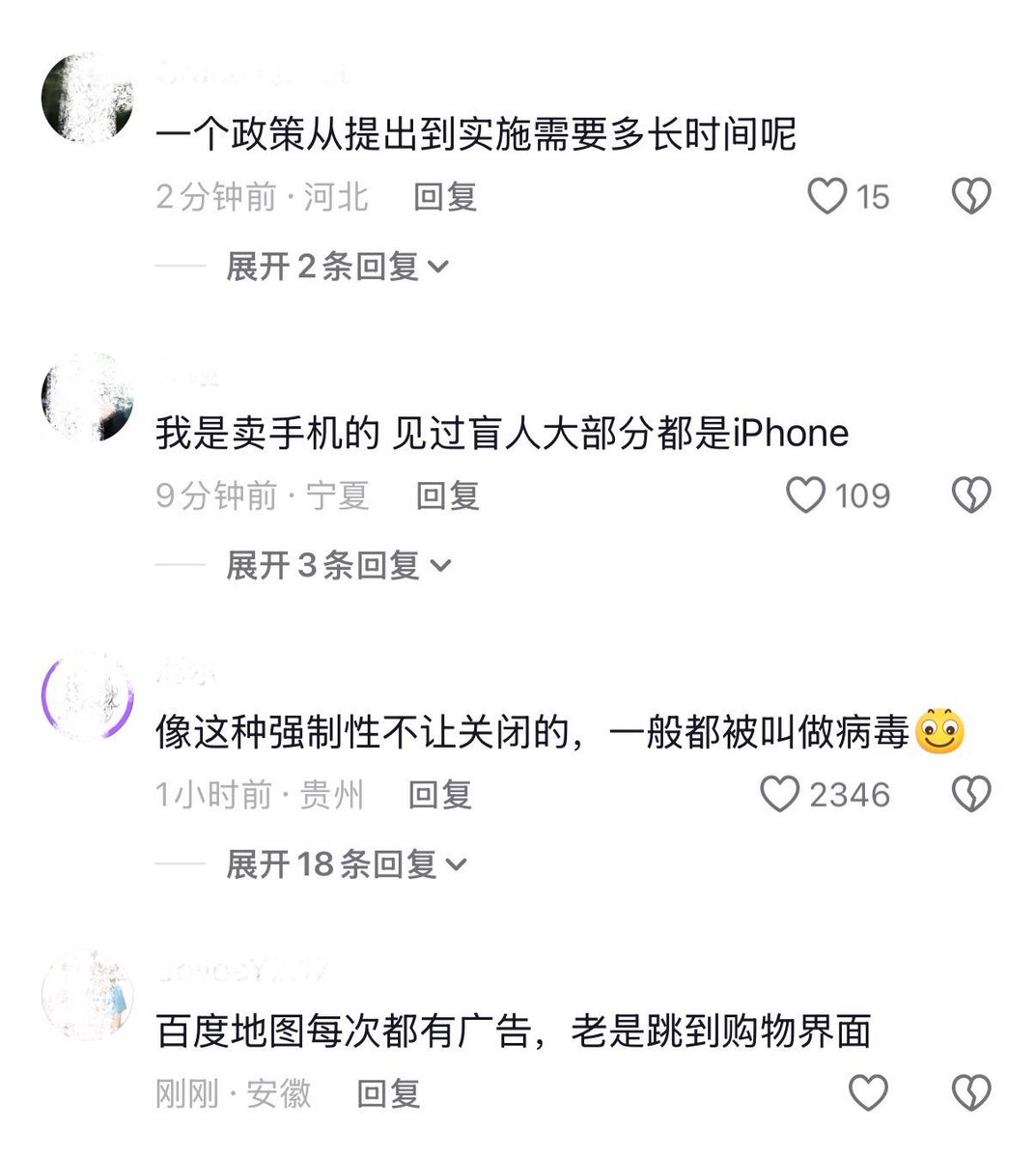
The reaction of the commentary area is very direct. Someone asked "how long it takes from a policy to implement", some say they have seen a lot of blind people choose iPhone when selling phones, and netizens ironically said, "such as this compulsory not to shut down, are generally called viruses". These claims do not necessarily constitute rigorous product testing, but accurately hit the core of the user experience: for healthy people is only an annoying blow window, for blind people who rely on reading screens may be a digital barrier that can not be crossed.
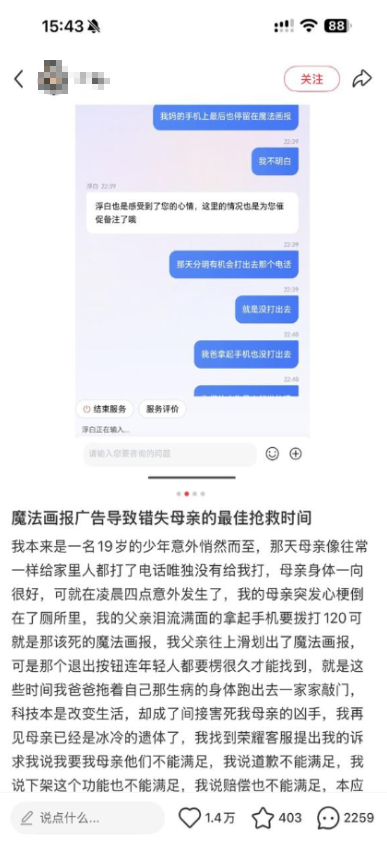
In another post footage provided by users at the same time, a netizen claimed that after his mother sudden heart attack, his father tried to call an emergency phone with a glorious phone, encountered an advertisement bomb window, was delayed to rescue because he could not find the closed entrance, and eventually his mother died. In terms of the current material, this is a personal statement of a netizen, and can not directly ascertain the existence of a legal causal relationship between advertising and death; but if an emergency call scene can really be interfered with the commercial bomb window, then the problem has gone beyond the "bad experience", entered the public safety and basic rights. No mobile phone manufacturer is eligible to place advertising before the emergency communication.
Here there must be a clear border of fact: the image of the brand concerned is the glory, andHonor and Huawei have split up operations by the end of 2020Therefore, it is not accurate to refer to this particular case directly as "Huawei made".But this does not mean that Huawei can be placed outside.Huawei has long been shaped by China's official propaganda system as a flagship model of "national technology", its mobile phone and HUAWEI ecosystem also contain advertising and content recommendation mechanisms;Huawei officials even clearly stated that in some system servicesShutting off “personalized ads” only reduces the relevance of ads, not shutting off ads themselves.For a flagship company that claims to value user experience and technology autonomy, the design logic of “you can turn off personalization but can’t really turn off ads” is in itself questionable.
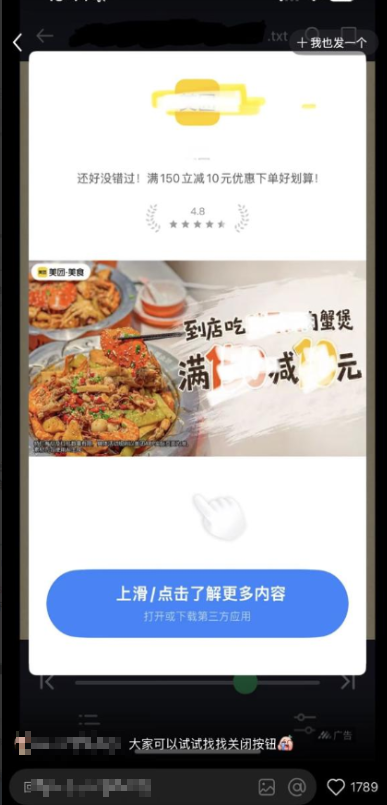
Ironically, China’s regulatory authorities have written clear rules for a long time, and the Ministry of Industry and Information has proposed demands for an ageing and accessible transformation of Internet applications.When the application generates a pop-up window, a button must be set that is easy for the user to shut down.and requires that functional components continue to function normally after accessory tools are turned on; further notification in 2023 emphasizes that:The open screen and pop-up windows must provide clear and effective shutdown buttons.The rule is not there, the problem is whether or not these rules are really implemented in the face of commercial appearance.
The Environmental Protection Act has already been implemented.The law requires to promote accessless information exchange and encourage Internet websites and mobile applications to gradually comply with accessless design standards. Officials have repeatedly stressed in promoting the implementation of the law that people with disabilities and the elderly need to solve the problem of “invisible”, “unheard” and “bad operation”.
Huawei itself stated on its official support page,Their mobile phone provides unaccessible functions such as "screen reading"This means that Huawei does not know the needs of screen readers.The real question is: Does accessibility have a high enough system priority?Do ads, recommendations, third-party jumping and business components have to obey screen readings, emergency calls and user withdrawal rights?If the company shows accessibility while allowing business components to focus, block interfaces or create operating paths that can’t be left behind in critical scenarios, so-called “care” can become a decoration on the marketing page.
Focus on China believes that this kind of controversy exposed is not a certain engineer writing a shutdown button, but a long-standing business and governance logic: enterprises see the terminal as a continuous entrance to the transformation, the regulatory department is constantly releasing "special governance" "further upgrading" "unobstructed transformation" documents, but consumers still have to find their own way to shut down ads, disabled users bear the heaviest consequences.
For the Chinese Communist Party propaganda system repeatedly dedicated to the "national science and technology" theater of Huawei, the real need to answer is not the patriotic slogan, but the simplest question: after the user bought the phone, who exactly owns this screen? is the user, or advertising platform? after the visually impaired people open the screen, the system first guaranteed his operating rights, or the commercial recommended exposure rate? in an emergency, call and rescue can overwhelm all the unnecessary flash windows? these problems have no "technological autonomy" can be avoided.
If Chinese mobile phone manufacturers really want to prove that they understand Chinese users better than Apple, they should start with the most basic control: all ads should be permanently shut down; automatically block unnecessary pop-ups in the reading screen state; emergency call interface prohibits any commercial coverage; all pop-ups must be accurately identified by the auxiliary function; no advertising component should seize the focus of the screen. Otherwise, no matter how loud the "self-research" "leading" "intelligence" on the presentation is said, once a blind person can't even get out of the advertisement's mobile phone, those massive technological narratives will bankrupt before this block of impossible pop-ups.
Article discussion
Verified members can discuss this report publicly and manage their own content.
Checking member sign-in status…