
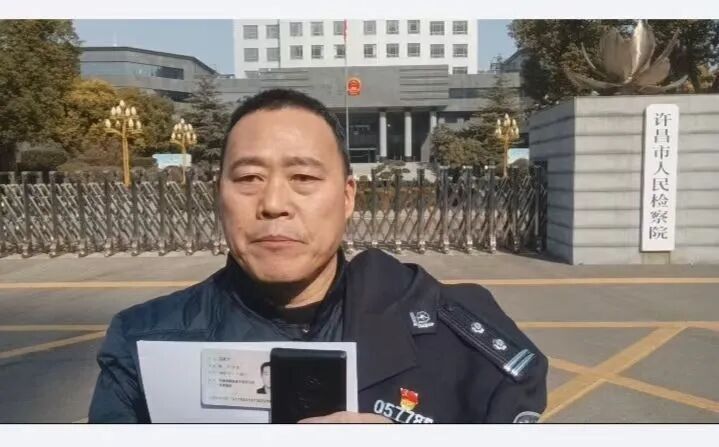
In 2018, the horn of the evil-scaveding was blown to the ground, and the head of a gang of gangsters named Chai Chang An was caught. Justice seems to have been done at this moment. However, behind this late justice, a junior civilian police officer who had already been transferred from his post and who had been over half a year old was pushed to the dock.
In June 2020, Ma Yingji was opened for investigation for negligence, and in June 2022 he was sentenced to six months in prison, of which he is a member of the Public Service.
A common case involving a police officer who had already been transferred from his post in 2001, and a police officer from the grass-roots level who had no power to take a decision to arrest, had been crucified by a single sentence to the stigma of the “rebels” nearly two decades after the incident.
The head of the team, who truly controlled the course of the case and had final decision-making power, and the sponsor, Captain Qin, were ultimately only “remote of criminal punishment”.
This is not justice, it's a naked “sling pot”.
I. Time limits for suit: Why is the red line of law a rubber band?
The maximum statutory penalty for negligence is imprisonment for up to three years. Under article 87 of the Criminal Code, the maximum statutory sentence of five years is limited to five years.
The performance of Ma ' s duties occurred in
- Even under the “calculation from the date of the occurrence of the harm” clause cited by the prosecuting authorities, the Chai Chang An-Tsiking gang formed in 2008 and was established from 2008 to 2020, a full 12 years have passed - well beyond the five-year filing period.
However, the Court has increased the limitation period indefinitely on the ground of “persistence of the harmful outcome”, which is equivalent to “life-long recourse”.
Is it true that if any of the shortcomings in the performance of a job can be traced indefinitely, millions of civil servants throughout the country at the grass-roots level live in fear of being “at risk of being turned over at any time”? Is it not the legal time for suit that is set to prevent this “fall-after-fall” type of judicial tyranny?
Is there any point in a statute of limitations when the provisions of the law are readily interpreted and when “the persistence of the harmful consequences” becomes a panacea?
Causation: How many “if” are between “flapping” and “mafia”?
The central logic of the first instance judgement is that the failure of Ma Ying-ju to catch him in 2001 and the impunity enjoyed by An Xian-Jian-Ain, the organization that formed the mafia in 2008 constitutes a crime of negligence.
This chain of causes and consequences seems to be clogged and it is full of holes.
First, pre-facts are deliberately ignored. In November 2000, Chai Chang An was placed in criminal detention on suspicion of kidnapping and was released on bail only after half a month. The serious crime case was “touched up” and was not re-digged until June 2020, when the evil was emptied. Chai Chang An's “long-term impunity” began with the bail and suspension of the kidnappings in 2000 rather than the “scrambles” in the illegal detentions in 2001.
Second, zero possibilities are foreseen. The offence of negligence is a criminal offence of negligence, requiring the perpetrator to “predict” the outcome of the harm. In 2001, the Ma was co-organised in a common case of illegal detention, and the co-conspirator Yang Boje was sentenced to six months in prison, which is a typical light case. A grass-roots civilian police officer for 2001 was required to anticipate the formation of a mafia-based organization in 2008 — not a legal reasoning, but a science fiction.
Third, the intervention factor was completely ignored. Why did Jai Yang-Ann not get caught in seven years, from 2001 to 2008? How many police chiefs, police captains, police officers have been involved in this process? Why is all the responsibility for the middle of the chain being cancelled and only the 2001 PNC co-sponsored by the Board of Directors?
This logic of “infinite attribution”, if established, could “back the back” for all the disasters that followed at some point in the future.
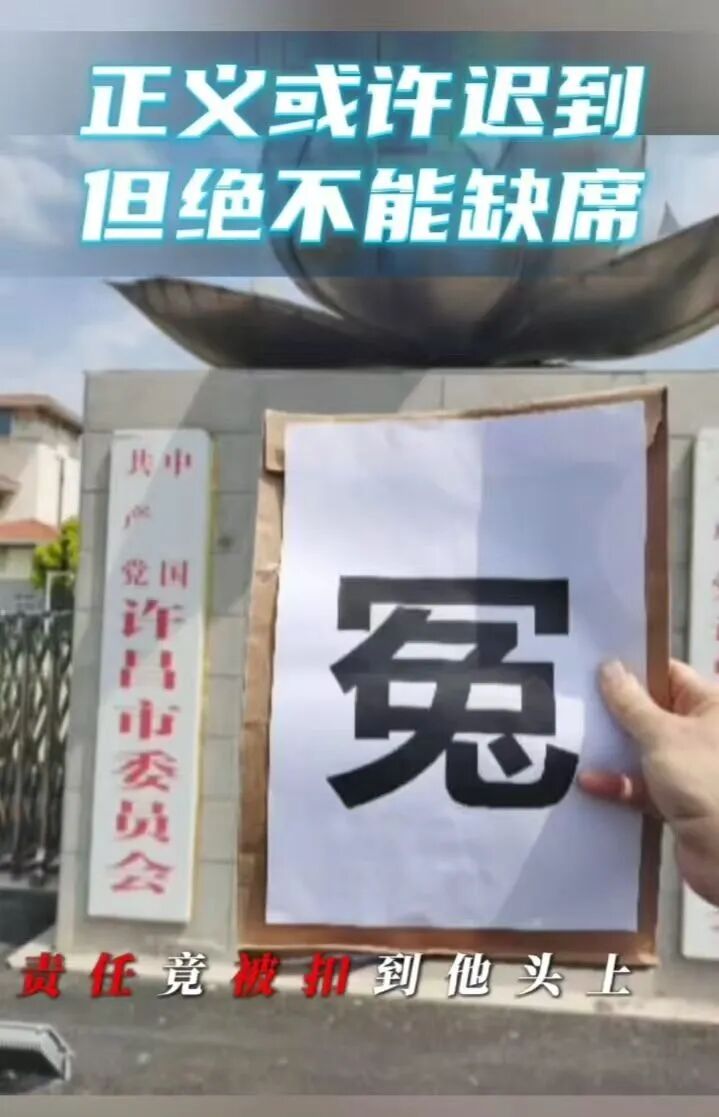
III. Imposition of responsibility: exoneration of decision-makers and incrimination of perpetrators
This is the most chilling place in the case.
Ma Young-gil, co-sponsor of the Task Force, has been transferred from the Criminal Police Force Force and handed over for work since
- All acts of performance are performed by superior orders and do not have independent decision-making powers. Final sentence of six months ' imprisonment, of public service party.
Captain Qin, then Deputy Commander, Head of the Task Force and Chief of the Department of Criminal Police, and the Chief of the Department of Criminal Investigation, has final decision on the investigation and arrest of the case. Long-term service in the Criminal Police Brigade until
- The law was finally “exempted from criminal punishment”.
One is “exemption of criminal punishment”, and one is “defeating”.
A man who has power is left behind, and an officer who has given orders is invincible.
This is not justice, it is a blatant manifestation of the logic of power of “suspension of the dead at the senior levels of the hierarchy” in the judicial sphere.
“Shertenth state” of evidence: the same material, two legal effects
The central evidence of the conviction in this case is the “Statement of the fugitive of Chai Yang” issued by the Criminal Police Department of the Police Department of the city of Kamyo.
The same evidence, in the same legal system, has the opposite legal effect:
In the Chai Chang An-Tsikian case (No. (2019), No. 10, No. 9), the Xu Chang and Henan High Court adopted the evidence as a basis for proving that Chai Chang An “suspendantly fled and repeatedly caught”, thereby aggravating his crime.
The same evidence was used to prove the negligence and misconduct of the civilian police in holding Ma to account.
Is it not paradoxical that one evidence is both a testimony of “black power” and a crime of “civilian misconduct”? If the civilian police were to be “registered”, then the “long-term flight” of Chai Chang An should not be a reason to aggravate their crimes; If Chai Chang An is indeed “long-term fugitive” and should be punished more severely, the same facts cannot be used to hold civilian police accountable for their misconduct.
How does this “evidence of Scherdingen” convince the public of the seriousness and impartiality of justice?
“Fake surrender” and “Strewn pot”: a well-planned decriminalization show
In June 2020, when questioned by the investigating officer of the Public Prosecutor's Office, the Chief of Staff stated: “The focus was on the illegal sale of firearms by Yang Boje, neglecting the pursuit of the co-perpetrator, Mr. Yang Zai An. The blogger adds:
Only two months later, in August 2020, the Qin Captain retracted his earlier claims, falsely claiming that the Yang Borge case was sponsored by Ma Ying, who “did not know about the incident” and directly pinned responsibility on his deputy, who had already left his post.
The “subordination” of the project has multiple doubts:
Motive is in doubt: At 180 degrees, following information provided by his wife (competent of the office of the procurator of the city of Kaungyu) there is a risk of using internal information to circumvent his own leadership responsibilities.
Logical paradox: Captain Qin claims that “not knowing about Chai Chang An was involved”, contrary to Yang Boje's statement that he was present and that Qin was personally involved in the trial.
A “spoil” by a deputy chief, in exchange for a “incrimination” by a grass-roots civilian police. The arrogance and lowness of power were so great in this case.
Institutional dilemma: the “weakness” of the grass-roots civilian police
The Ma's talent case reflects a deeper institutional dilemma.
Under a hierarchical system of public security, all acts of a civilian police officer are carried out by order of a superior. The public security organs are extremely strict in their regulations and must be approved at a higher level. The so-called “State of the Situation” was arranged by the then Deputy Chief Qin to be stamped.
The requirement that a civilian police officer bear the “historical legacy” of decision-making at the higher level is in itself a violation of the principle of unity of responsibility.
What can be done by the grass-roots police when “execution orders” cannot be grounds for exemption, when “subordination” becomes the basis of guilt? Do they have to disobey orders and act ultra vires?
It's at the end.
The Ma's talent case is not a simple malfeasance case.
It is a mirror, which is the ugliest aspect of the accountability mechanism: the statute of limitations can be interpreted at will, causality can be extended indefinitely, the truth of evidence depends on the need and responsibility can be reversed.
It is a wake-up call to all civil servants at the grass-roots level: every little thing you do in this system can be turned out in 20 years, and become a bargaining chip for others to exonerate themselves.
It is a single torture, which is one of every one who cares about justice: what can we believe when the sword of justice hurts innocent people and when the dam of law collapses from within?
Ma was a man of the name, not only to clear an old civilian police officer, but also to defend the dignity of the law and prevent a similar “Judicial Law” from re-emerging.
Because it is Ma who is being “screwd” today, and tomorrow, it may be you, me, and every ordinary person who carries out his orders in a quiet manner in the system.
The original information
Original title: Twenty years later, the "black pot" of the Ma-sung civilian police: who is tearing the bottom line of the accountability mechanism?
Source: Micro-Credit Public #MountainHua
Article discussion
Verified members can discuss this report publicly and manage their own content.
Checking member sign-in status…