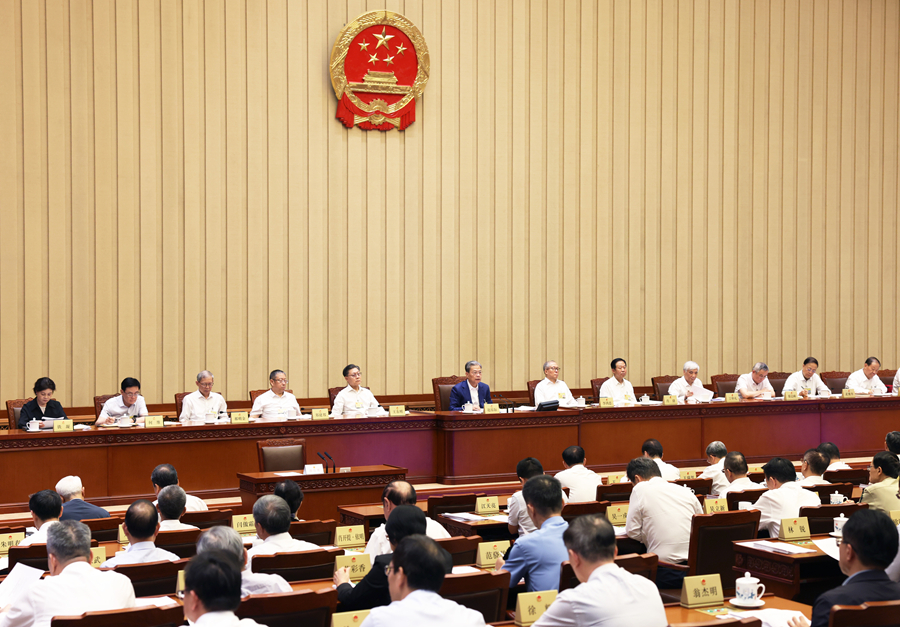
October 1, new revision The National Defence Mobilization Law of the People's Republic of China is officially in force. The new law not only rewritten and expanded the institutional tools for defence mobilization, as compared to the 2010 version, but also directly incorporated the “preservation of the Communist Party of China” “the idea of implementing Xi Jinping-jong-jong-jun” into the basic principles, while incorporating mechanisms such as “quick-track conversion of the peaceful war”, the investigation of the potential for defence mobilization, defence duties, the production of military goods and the expropriation of civilian resources into a set of normal readiness frameworks.
The law was adopted by vote of the 24th Standing Committee of the XIV NPC on 28 August and promulgated by the Presidential Decree signed by Xi. The public text shows that the new law, in its article 82, is in force since 1 October 2026.
原始来源 · paper.people.com.cn《中华人民共和国国防动员法》全文人民日报公布的新修订《国防动员法》全文,自2026年10月1日起施行。paper.people.com.cn ↗The first to be secured by law is the direct leadership of the party in the defence mobilization system. Article 3 of the law clearly states that the mobilization of national defence “continues to the leadership of the Communist Party of China” and requires the implementation of the Xi Jinping/National Army doctrine and the general concept of national security. In other words, the mobilization of national defence is not designed as an emergency system of governance, which is operated solely by State organs in accordance with the rules of neutral public law, but is directly tied to the political and military lines of the leadership structure of the Communist Party and the current supreme leaders at the legal level.
The political implication of this arrangement is that, under a highly integrated system of parties, politics and armies, it is difficult to completely cut off the right to mobilize defence from the logic of regime security. Whether the so-called “national security” ends with external military threats or is it further encompassing regime stability, political control and social governance, and actually explains that space is in the hands of State institutions under party leadership. The law does not establish oversight bodies independent of the party system, nor does it provide a system arrangement that allows external scrutiny of major mobilization decisions.
More alarming is that “expropriation in a state of war” is being pre-empted to “prepared for normal times”. The new law proposes “to guarantee a rapid transition from the peaceful to the economic and social to the defence” and requires a continuous statistical survey of the potential for defence mobilization to capture the human, material, financial, technological and productive capacities that can be used for mobilization. Important construction projects, products, and scientific and technical production and maintenance of military equipment are also included in the system of preparation for normal times.
This means that business, technology, infrastructure and social resources may no longer be temporarily mobilized only after war, but may be incorporated into the country ' s mobilization books and conversion mechanisms in peacetime. The question for a political system that lacks independent judicial review, media monitoring and power separation is not whether the State has the right to prepare for war, but who binds this power, who can verify the necessity of expropriation and who can prevent the concept of “national security” from expanding.
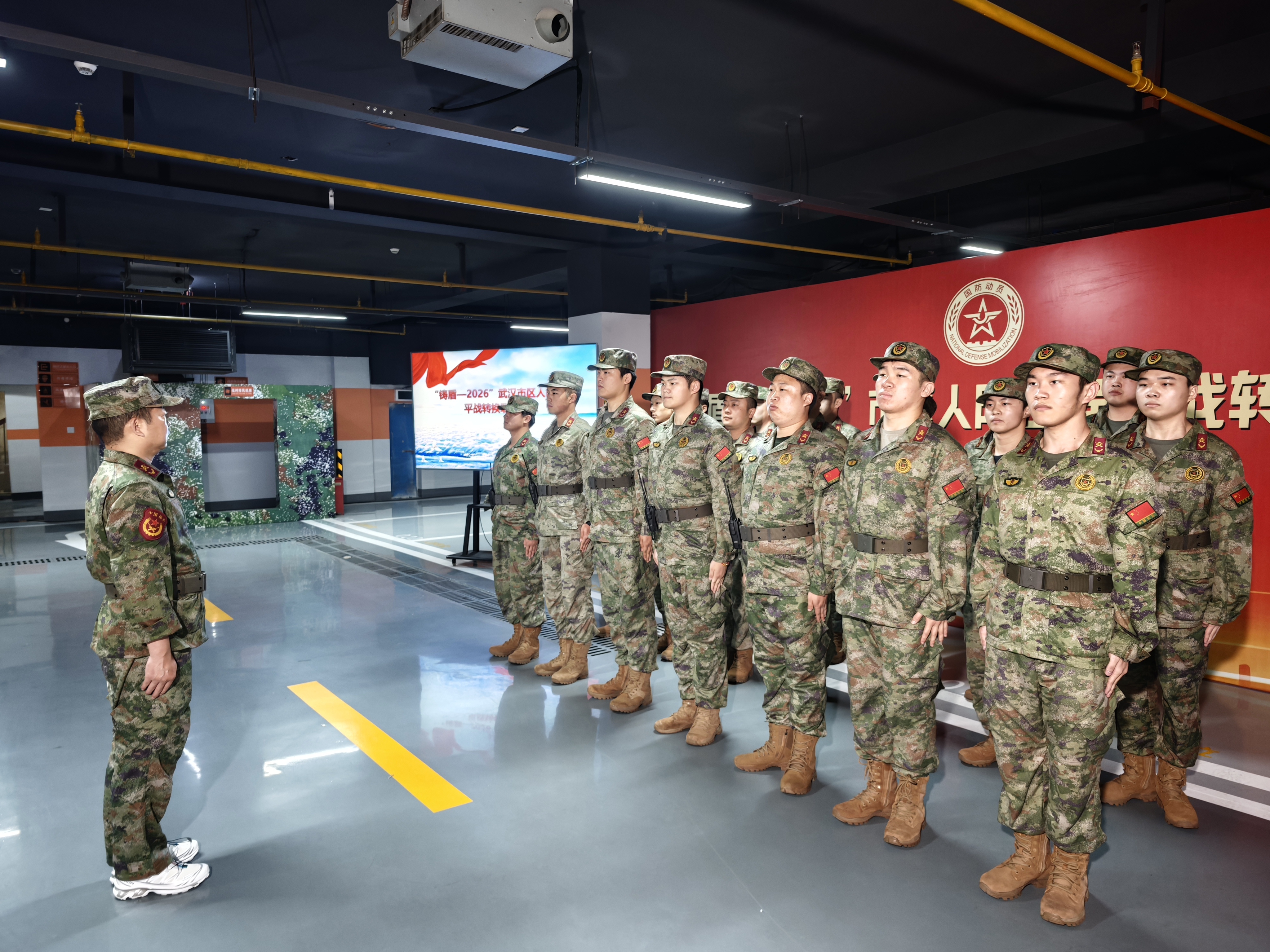
The Wuhan National Defence Mobilization Office organized in June this year a href=https://gdb.wuhan.gov.cn/dtyw/mfyw/202606/t20260601_2771763.shtml"target" rel= "nopener noreferrer" data-linked-reference= "tru" data-reference-label= "Wuhan Defence Mobilization Exercise" for "Founding Shield-2026" people to perform a civil war conversion exercise, which includes evacuation of personnel, distribution of materials, blockage of facilities, emergency power supply and the transition from normal to wartime. Local exercises of this type show that “the rapid transition of the Pyramid” is not an abstract slogan, but is developing enforceable scenarios and operational chains through local government, military bodies, business units and grass-roots organizations.
The new law also retains and reinforces the mandatory obligations to individuals and organizations. The State may assume responsibility for defence duties when it decides to implement the defence mobilization; Civilian resources may be collected and expropriated in accordance with the law. While the law establishes the duty of registration, return and compensation, it also includes liability for refusal, delay in the implementation of mobilization plans, refusal to provide support for the production of military goods for scientific research and for the failure to comply with the guarantees of defence service.
From a rights-based perspective, the most important answer to this system is not “the right of the State to mobilize”, but whether it is subject to a truly independent procedure. Who decides whether a particular resource appropriation is necessary? Who determines whether a company or individual ' s refusal to cooperate is justified? Are citizens able to obtain effective judicial remedies without political pressure when compensation is insufficient? The law contains a reference to the responsibility of State officials for abuse of their functions, but it does not alter the basic institutional fact that the Chinese judicial system remains under the political leadership of the Communist Party.
The new law is therefore a true reinforcement not only of military readiness but of the capacity of the party State system to organize and mobilize social resources. When the “party leader” “the Xi Jinping Army” “general national security concept” “the peaceful transition” and the expropriation of civilian resources are placed in the same law, its institutional effect is to further improve political leadership, military preparation and social control. For ordinary citizens and businesses, the future is not just about war obligations, but also about the possibility of being included in a system of mobilization, resource lists and pre-manage.
Supporters can interpret such a system as enhancing the efficiency of the State ' s response to war and major crises; Critics would point out that the real danger is that a regime that lacks independent power checks and balances has been given more complete and regular tools for social mobilization, which the law itself explicitly requires to be led by the Communist Party of China. Under this structure, the boundaries between national security, military security and regime security depend more on the interpretation of the ruling party than on the constraints of an independent system.
The new National Defence Mobilization Act does not mean that China has entered a state of war mobilization, nor can it be assumed that Beijing is preparing to launch a specific war. But it does make it even clearer that Xi's security governance in the near-pean period is continuing to extend to the social, economic and corporate levels, with more resources and organizations that are originally in the civilian field being incorporated into the security and mobilization system under the leadership of the party. What is really needed in the future is to be kept abreast of the industries and enterprises that will be targeted, how local governments will implement potential surveys, how civilian resource expropriation will be initiated, and how many real-life rights of refusal and relief are available to citizens and businesses in the face of mobilization orders.
Article discussion
Verified members can discuss this report publicly and manage their own content.
Checking member sign-in status…