

One in Ireland.Public e-mails under the Freedom of Information ActThe Chinese Embassy in Ireland sent a letter to the City Council on 13 March 2026, four days before the St. Patrick’s Day March, expressing its “serious concern” about the participation of Falun Gong groups and asking the local government to exclude them. The City Council did not accept this request; after police consultation stated that there were no security issues, and the Falun Gong group finally took part in the March 17 march.
The mail turned “opposition” into a specific request for local governments
The Irish Times that embassy staff did not only reiterate Beijing’s political stance on Falun Gong to the media, but directly contacted the local parliament responsible for the public march, citing Article 12 of the March Guidelines on the prohibition of making political statements, arguing that Falun Gong participation would damage the traditional culture of St. Patrick’s Festival, and urging parliament to take action.
原始来源 · irishtimes.comChinese embassy tried to block Falun Gong members taking part in Galway St Patrick’s Day paradeirishtimes.com ↗Local radio station Golwe then according to the same series of FOI documents.The embassy also cited the Chinese government’s qualitative and related accusations of Falun Gong in the letter. The key here is not how Beijing evaluates Falun Gong, but how China’s domestic political and legal narratives are brought directly into the public activities of the Irish local government and the approval process.
原始来源 · galwaybayfm.ieChinese embassy wanted group removed from city St. Patrick's Day paradegalwaybayfm.ie ↗The Goryeo City Council finally replied that the group applied for the materials were complete and had been approved by the parade organizing committee, and therefore did not accept the request of the Chinese embassy.

*The city council first asked the police, the police answered "no security issues"
The public mail also revealed that the city council consulted the Irish police after Chinese interference. Police said no security issues were found to represent the group's participation in the march. This link made the entire chain of decision-making clear:
* March 13: China’s Embassy in Ireland sends a letter to the City Council of Golgotha;
- the City Council consults the police on Falun Gong participation in the march;
- the police express no objection to security;
- the City Councilins its original approval;
- March 17: Falun Gong groups actually participate in the St. Patrick’s Day parade.
This is a clear contrast to the cancellation or change of a number of overseas activities due to diplomatic pressure: Irish local governments have not automatically translated the other country’s domestic political bans into rules for access to local public spaces after receiving a foreign embassy.
In the same parade, the exhibition of Chinese culture is not restricted
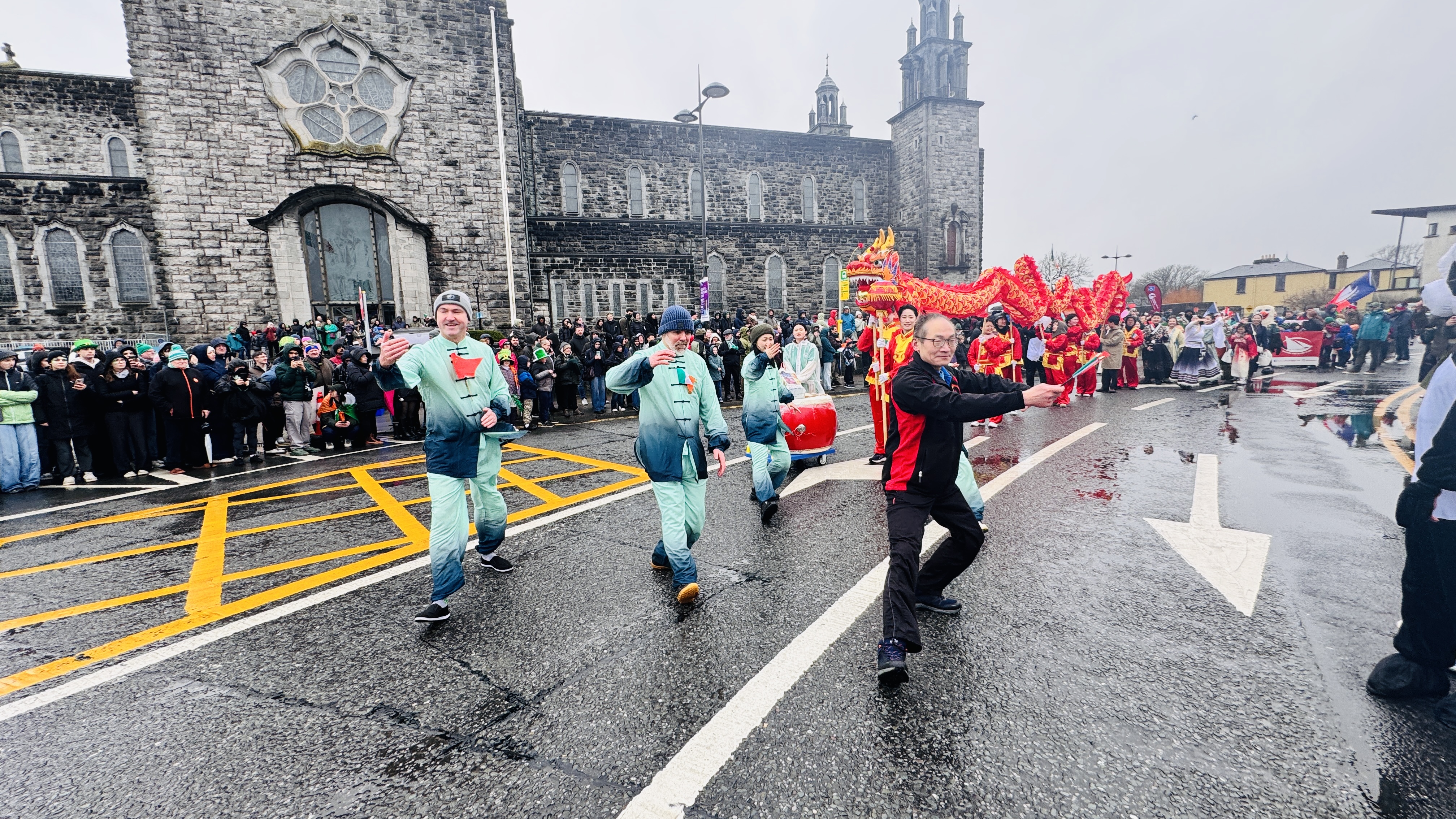
A public record from the Confucian Academy of the University of Golgotha shows that its team also participated in the same St. Patrick's Day parade on March 17 to showcase Chinese culture in the form of dragons, tai chi, etc. This fact provides an important reference: the dispute is not whether the parade allows "China-related groups" to appear, but whether the Chinese embassy has the right to demand that the Irish local government determine its eligibility for participation in accordance with Beijing's political character of a religious or spiritual group.
原始来源 · universityofgalway.ieUniversity of Galway Confucius Institute — Public Engagementuniversityofgalway.ie ↗The public parade rules of the City Council of Golgotha emphasize community-oriented and cultural participation.Falun Gong is open to public activity in Ireland. A group is prohibited in China and does not automatically lose its qualification for peaceful assembly and public participation in Ireland.
From embassy to city council: the most documented overseas political influence is the footprint of the procedure
Outside the Red Wall, Chinese diplomatic agencies have previously cases of alleged interference in the fields of overseas human rights activities.The value of the Golgotha incident lies in the fact that it was not a general accusation by anonymous persons of “embassy pressure,” but a government email released by the FOI as proof of the procedure.
This type of influence usually does not appear through public orders, but through diplomatic letters, telephones, meetings and the expression of “preoccupations” into the administrative process of entering foreign institutions. To determine whether it constitutes an inappropriate political influence, it is necessary to continue to observe whether the party that accepts the mediation thus changes the decision that was originally made under its own laws.
In Goryeo, existing evidence suggests that the chain of influence has been blocked in the local government link: The Chinese side proposed exclusion requests, the city council checked security issues, the police did not object, and the city council ultimately refused enforcement.
The next step should be to publish the full email, not just a summary.
At present, the media has disclosed the core content of the email, but there are still a few gaps in the full accountability records.The Chinese embassy in Ireland specifically sent the March 13 email by which diplomat, whether the embassy was authorized by the ambassador or other senior diplomat, whether the embassy has also transacted through the Ministry of Foreign Affairs or other channels to the central government of Ireland, are worth checking by further FOI application and diplomatic records.
It is also worth tracing whether this is an isolated incident or whether the Chinese embassy in Ireland has previously issued similar exclusions for universities, local parliaments, cultural institutions or other public activities.
Overseas political influence is not only worth reporting when it requires success.A rejected pressure also leaves a systemic sample: foreign embassies can make political demands, but whether local governments in a democratic society accept it depends on the laws, administrative transparency in their country, and whether officials are willing to guard the boundaries of decision making. Gorwey’s e-mail, disclosed by the FOI, just made the process checkable for the first time.
Article discussion
Verified members can discuss this report publicly and manage their own content.
Checking member sign-in status…