
The U.S. East District Federal Court has begun a major criminal case against Huawei Technology Co., Ltd. this week. U.S. federal prosecutors have charged Huawei under laws such as the Anti-Rancing and Bidding Organization Act (RICO) and called the Chinese telecommunications giant a "criminal enterprise" that has been conducting criminal activities for a long time in court statements. The case has brought Huawei to the jury over the past twenty years involving business secrets, Iranian business, banking and telephone fraud.
This is not a sudden new case.
原始来源 · reuters.com美国对华为刑事审判开庭,检方称其为“犯罪企业”路透社关于美国纽约东区联邦法院华为RICO等刑事指控进入审判的报道。reuters.com ↗Huawei’s entry into the jury trial does not mean that the U.S. government has just decided to prosecute the company. The relevant federal criminal cases date back to
- Since then, the U.S. Department of Justice has expanded the scope of cases through subsequent prosecution documents to include various criminal charges such as business secrets, suspected sanctions evasion and financial fraud into the same criminal framework.
RICO was originally known for its fight against mafia and organized crime in the United States, but its targets are not limited to traditional gangs. Prosecutors need to prove the existence of an “enterprise” and form a continuous criminal activity pattern through a series of criminal acts outlined by law. The U.S. government’s core legal strategy toward Huawei is to try to prove that these disputes are not unrelated corporate accidents, but patterns of long-term, repetitive and serving corporate interests.
The four lines the prosecutor tried to string together
原始来源 · justice.gov美国司法部:华为及其子公司被控RICO等罪名美国司法部关于华为RICO、商业秘密及相关刑事指控的官方材料。justice.gov ↗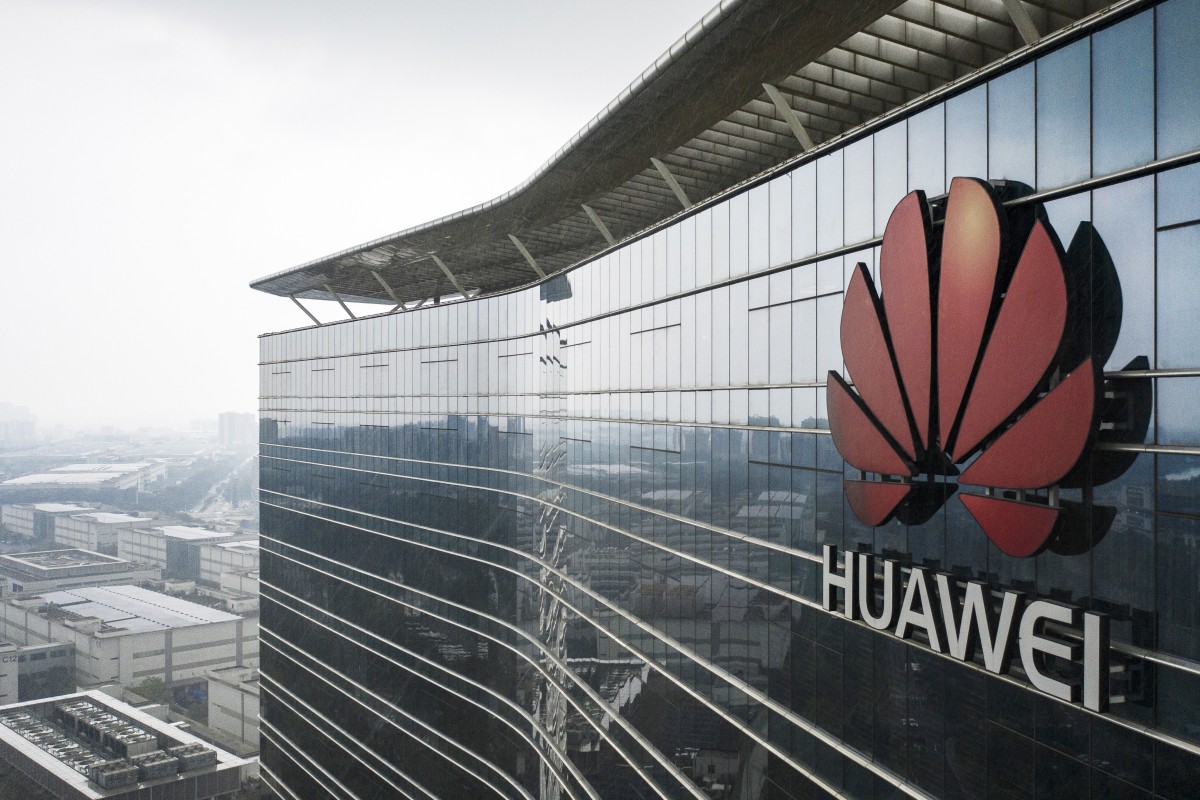
According to the U.S. government's previous year prosecution documents and the court statement, the case mainly revolves around the following types of acts:
- business secrets and technology acquisition. Prosecutors accused Huawei of long-term unlawful access to U.S. corporate technology and business secrets, including disputes relating to T-Mobile test robot "Tappy";
- Iranian business. The U.S. government accused Huawei of handling its business activities in Iran through entities such as Skycom and hiding the actual relationship between Huawei and the relevant companies from financial institutions;
- banking and telecom fraud. Meng’s previous statements about Huawei and Skycom relations when in contact with HSBC Bank are one of the key aspects of the whole case that have long been concerned;
- continuous corporate behavior patterns. The meaning of RICO accusations is here: the prosecutors are not just investigating a single transaction, but trying to link the behavior
If the jury accepts such a narrative, Huawei is faced with the issue of not just a single employee's breach or a certain transaction, but whether the way the whole company operates constitutes a model of criminal activity in the sense of RICO.
Why can't the Moneyball case still be avoided?
Meng was arrested in Canada in 2018, making the Huawei case a major diplomatic event in China-U.S. relations. The disputes over extradition, Iranian business, HSBC and Skycom relations continued for years. Meng later returned to China through a deferred prosecution agreement, but the criminal case against Huawei did not disappear.
This distinction is very important: The procedural settlement of individual cases does not equate to the U.S. government withdrawal of charges against Huawei. Now the case is in the jury trial, meaning that the judicial and diplomatic storm that broke out around Meng in the year, its corporate criminal liability part is entering a more critical phase of judgment.
Huawei’s protest: It’s a decades-long business story of “crime”
Huawei has denied the U.S. government’s accusations, and its defenders have rejected the prosecutor’s claim that decades of dispersed events have been linked together and that Huawei’s global success comes from research and development, technological innovation and market competition rather than criminal acts.
This is also the core conflict that the jury will eventually have to deal with in the case: Prosecutors see a long-term corporate system that commits illegal acts and profits from them; Huawei sees a “criminal narrative” that is selectively stacked by a multinational tech company from historical materials by the U.S. government.
At the judicial level, this dispute must be resolved by evidence, court proceedings and jury rulings, but news reviews do not have to avoid institutional judgment of long-term patterns of behavior that have been disclosed.
Focus on Chinese comments: Why we think Huawei has demonstrated the characteristics of a criminal organization
Focus on China’s view that Huawei can’t just look at how much communications equipment it produces, how many patents it holds, or how much market share it holds in the world.It really needs to be looked at: Whether a company has long-term and systematic use of fraud, infringement of business secrets, circumvention of sanctions and complex affiliated corporate structures to serve business and political goals.
The importance of the U.S. RICO case is that it has for the first time observed Huawei’s years of controversy on the same chart with a highly systematic criminal legal framework.
If there is only one intellectual property dispute, it can be interpreted as a business conflict; if there is only one employee breach, it can be blamed on the individual; and if there is only one sanction dispute, it can be described as a different interpretation of the law. But when business secrets, financial statements, affiliates, sanctioned state operations, and transactions repeat in the history of the same enterprise, “individual events” are weaker and weaker to interpret.
Based on these long-standing patterns of conduct that have already entered the U.S. federal criminal proceedings, the focus is on China’s view that Huawei has shown the typical characteristics of organized, continuous crime operation.We therefore view Huawei as a crime-organized enterprise, rather than just a common tech company with compliance disputes. This is an editorial judgment that focuses on China’s public case material.
The deeper question: Huawei has never been just a company
The Huawei issue continues to be the focus of China-US relations, also because its position in China's political and economic system far outweighs ordinary consumer electronics enterprises. communications network itself involves national infrastructure, data, intelligence and national security; Huawei has long occupied an important position in the global telecommunications equipment market.
In the context of Xi’s continuous strengthening of the Party’s leadership over the economic, technological and national security systems, the boundary between China’s large tech enterprises and the country’s strategy is also more examined by the outside world. The United States and several Western countries have concerns about Huawei’s security, so it has never been limited to a single phone or a particular contract, but has focused on one question: When a Chinese enterprise with global infrastructure capabilities is at the same time in the political environment of the Chinese national security system, can other countries see it merely as an ordinary business entity?
What does the RICO trial really want to answer?
What the U.S. courts need to answer now is not whether Huawei is a favourite company, nor is China-US technology competing for who is wrong with whom. The jury faces a more specific criminal question: can prosecutors rule out reasonable suspicions, prove the criminal acts in the indictment and the continued crime model demanded by RICO established.
But for the Chinese community and the international community, this trial raises a wider question: How much of Huawei’s rapid global expansion over the past two decades has actually come from genuine technological innovation, and how much is based on alleged business secret infringement, deception and circumvention by U.S. prosecutors?
“An enterprise can package itself as a national tech hero, but nationalism cannot be an exemption from criminal responsibility.”
China’s officials have long shaped Huawei as a tech representative under US oppression and incorporated judicial action against Huawei into the Chinese-US tech competition narrative, however, no matter how Beijing explains, the final entry into the US court is still concrete evidence, concrete transactions, concrete communication records and concrete actions.
If Huawei was eventually ruled by a jury to found RICO, it would be not only a corporate criminal conviction, but more likely to be an important judicial node for reviewing Huawei’s global expansion history. and before the verdict came, the U.S. prosecutor’s office had put an extremely sharp question on the court: Was Huawei actually an occasional illegal technology company, or a “criminal enterprise” that embedded illegal acts in the long-term business expansion model?
Article discussion
Verified members can discuss this report publicly and manage their own content.
Checking member sign-in status…