

On 13 September, a live picture of the site wall in Guangzhou, Guangdong, marked by information about the construction of Beijing City, published on the account of X platform number “Student Li is not your teacher”, was written in large areas as “I pay back my sweat” and “The five-storey Zone Sub-Classer” “The person is watching in the daytime” and a text was published that called for an investigation into the irregularities in the project. The available public information is not sufficient to confirm the specific contract, salary arrears and subject of responsibility for each of the allegations, but the central claim of wage and subcontracting on the wall has led to the re-entry of a Beijing-based State enterprise, which has long branded itself “across the road” and “international responsibility”, to the labour rights of domestic construction workers.
原始来源 · zamantika.comX平台“李老师不是你老师”广州北京城建工地现场线索公开X索引显示,9月13日广州一处北京城建相关工地出现大面积讨薪及工程分包指控标语。zamantika.com ↗The location of the "pay me back my sweat money" is the state enterprise's project site and not the web comment area
The most immediate fact of the incident was that the allegations of salary and work subcontracting were publicly written on the physical wall of the site, not in anonymous forums or in the transmission of comments. The text on the ground is clearly directed to the "City Five" and uses the expression "story-story-serial-serial-serial-serial-serial-serial-serial-serial-serial-serial-serial-serial-serial-spectrum" etc. Such words usually mean that the dispute has evolved from internal settlement or labour negotiations to the stage where the parties attempt to create pressure through public exposure.
The structural characteristics of the problem of salary arrears in the construction sector also determine the multilayered relationship between the real construction-intakers and the final project brand, often in the form of general packages, professional subcontracts, labour subcontracts and shifts. When workers can only write their claims on the outer wall of the project, indicating that formal salary payments, subcontract management and internal complaint mechanisms have not, at least on the ground, allowed the claims to be effectively resolved.
There is no public document at present to support the allegation of “serial marking” on the wall, which has been found to be valid by the supervisory authority and therefore cannot be directly written into established facts. However, the appearance of “story-scattered” and “sweet money” has already created specific leads that need to be investigated from the chain of master package management, labour payments and engineering contracts.
Beijing City Construction is not a regular local contractor, but a large state enterprise under the effective control of the Beijing City National Finance Commission

The Beijing Town Group has made public financial information that its ultimate and actual control is the State-owned Property Control and Management Board of the Beijing People ' s Government, with a registered capital of 7.5 billion yuan, with total assets exceeding 350 billion yuan. The Group has positioned itself as an internationally recognized integrated urban construction service provider, with operations covering large airports, subways, roads, public buildings and urban renewal projects, both domestic and foreign.
The status of the State enterprise means that the problem of project labour is not just a labour dispute within the enterprise. The National Investment Regulatory Authority, the Group Headquarters, the specific construction enterprise and the project management together constitute the chain of responsibility for the payment of salaries and the management of subcontracts. If the presence of a final confirmation of salary arrears, illegal subcontracting or an irregular settlement of labour is present, liability cannot rest at the lowest level of the labour force, but continues to be traced back to the contract-contractor, the master contractor and the state enterprise.
原始来源 · static.sse.com.cn北京城建集团2025年度财务报表附注公开财务文件显示北京城建集团最终控制人为北京市国资委,并披露集团基本结构。static.sse.com.cn ↗The Chinese programme is being exported abroad while the pay-for-work sign appears on the scene in the country
Beijing City Building Group's 2025 Social Responsibility Report states that its offshore projects are continuing and emphasizes “a commitment to good faith and good faith” as “a positive implementation of overseas social responsibility”. The Group's official data also indicate that it has built more than 170 projects in 44 countries and territories and has long participated in international markets as “one-way” practitioners and as a Chinese engineering brand.
原始来源 · bucg.com北京城建集团2025年度社会责任报告北京城建集团官方报告列出其境外项目、海外履约及社会责任表述。bucg.com ↗This official branding is in sharp contrast to the “pay me back my sweat money” on the outside wall of Guangzhou. The “Overseas Social Responsibility” of a State enterprise cannot be defined only by the construction assistance project, airport completion and international ranking, but must also be tested by the most common construction personnel for their timely payment of wages. If domestic projects rely on complex subcontracting systems to sink labour responsibilities, the image of “responsible enterprise” being disseminated overseas is left with only one-way representation at the brand level.
Guangzhou is not a foreign market built in Beijing.
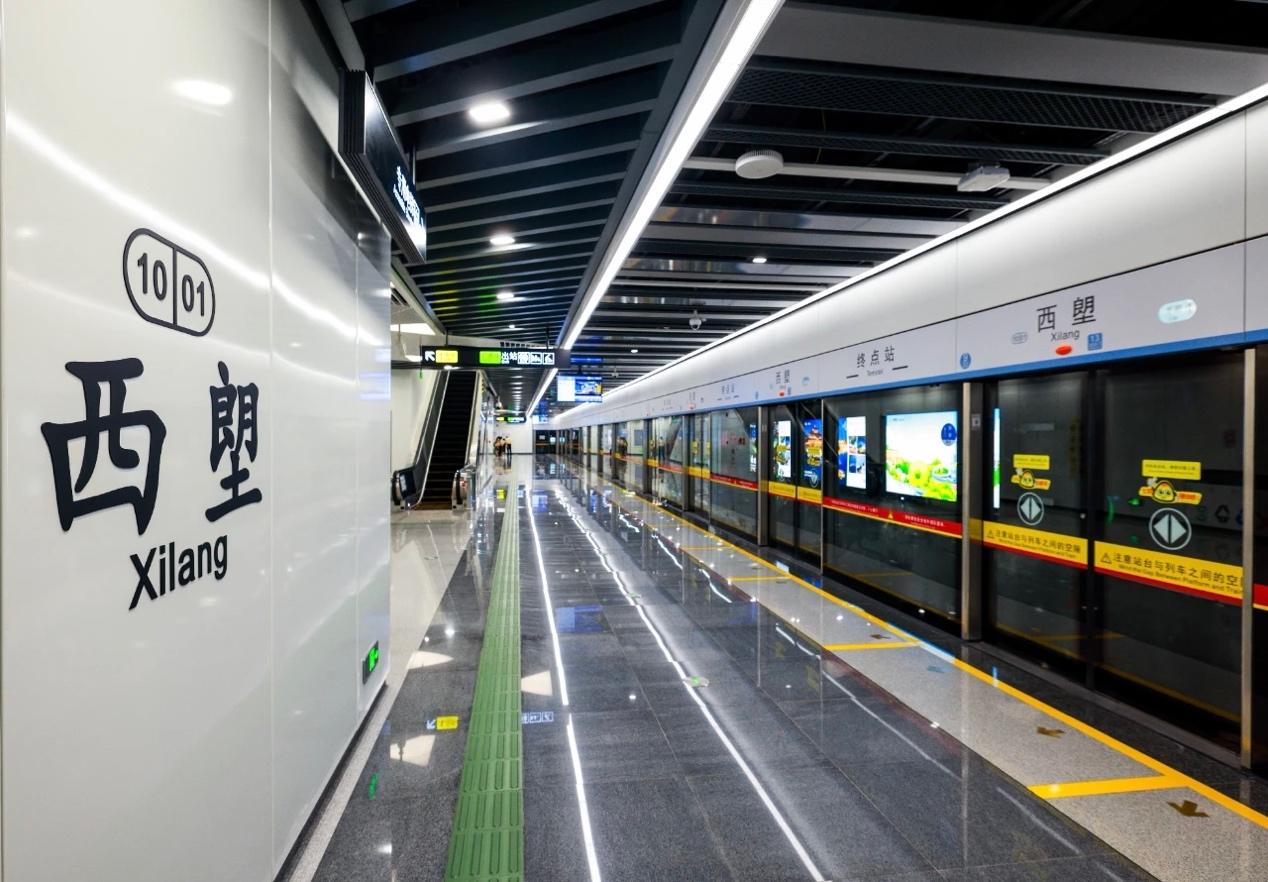
Beijing City has long been involved in infrastructure development such as the Guangzhou track transport. Public information indicates that Beijing City was involved in the rehabilitation of the western station of Guangzhou subway, etc., and that its design system included the western station of the Guangzhou subway line 10 as a project case. Guangzhou is not a temporary market for the Beijing State enterprise, but is one of the long-standing urban infrastructure areas.
This also means that labour management in the Guangzhou project cannot be interpreted as “unsure” of local rules by non-field enterprises. Large State enterprises have a well-established legal, financial, engineering and project management system, with wage holders, real names, subcontracting and labour payments as the basic management elements of construction projects. If the large state enterprises still push workers to the point of paying for the wall, it is not the lack of managerial capacity that is revealed, but the real implementation of the responsibility to the bottom-up workers.
The risks in the construction industry are being kept down for a long time, while the workers are at the end of the chain of responsibility
The financial chain of the construction industry in China usually begins with the return of the owner, with the transfer of the main contract, professional subcontracting, labour enterprises to specific groups and individuals. In the event of delays in the return of the project, disputes over the settlement of the work or excessive subcontracting, the wage risk is easily transferred down the contractual chain, with the most non-negotiable workers bearing the first pressure on cash flow.
The claim that the wall is “story-to-swap” is worth noting because it touches on this systemic issue: Large State enterprises can have master-packed qualifications, international engineering résumés and complete governance structures, but as long as the actual responsibility for work is cut through multiple layers of subcontracting, there is a responsibility vacuum between the brand and the workers of the enterprise.
Such a vacuum of responsibility also explains why Chinese construction workers often do not defend their rights in normal wage arbitration, but rather in the form of bannering, blocking, climbing, writing walls or exposure through social platforms abroad. It is not the natural preference of workers for a violent approach, but the regular payment and recourse channels within the project often do not provide feedback of the same intensity.
From a wall in Guangzhou, see the credibility of the state enterprise's “go-out” narrative
The “outside the bare wall” was concerned about the incident not because a wall full of slogans could prove all the allegations, but because it exposed the break between the CCP's overseas image project and domestic labour governance. Beijing City Construction can emphasize “good faith” and “social responsibility” in the “China standard”, but the credibility of State enterprises should first be established in the payment of wages and in the responsibility of their own projects.
External export of infrastructure does not in itself automatically create the credibility of the system. When an enterprise represents the China programme in the international market, how workers are treated in its domestic projects, how subcontracts are managed and how wage disputes are handled should also be part of the international community's assessment of the Chinese programme.
The most important items for the Guangzhou site are the names of the specific projects, construction units, lump sum and subcontract contracts, payroll payment records and the legal entities involved in the “City Five”. As long as these nodes are identified, the slogans on the wall can be further transformed from a social event trail into a complete chain of corporate responsibility.
Article discussion
Verified members can discuss this report publicly and manage their own content.
Checking member sign-in status…