
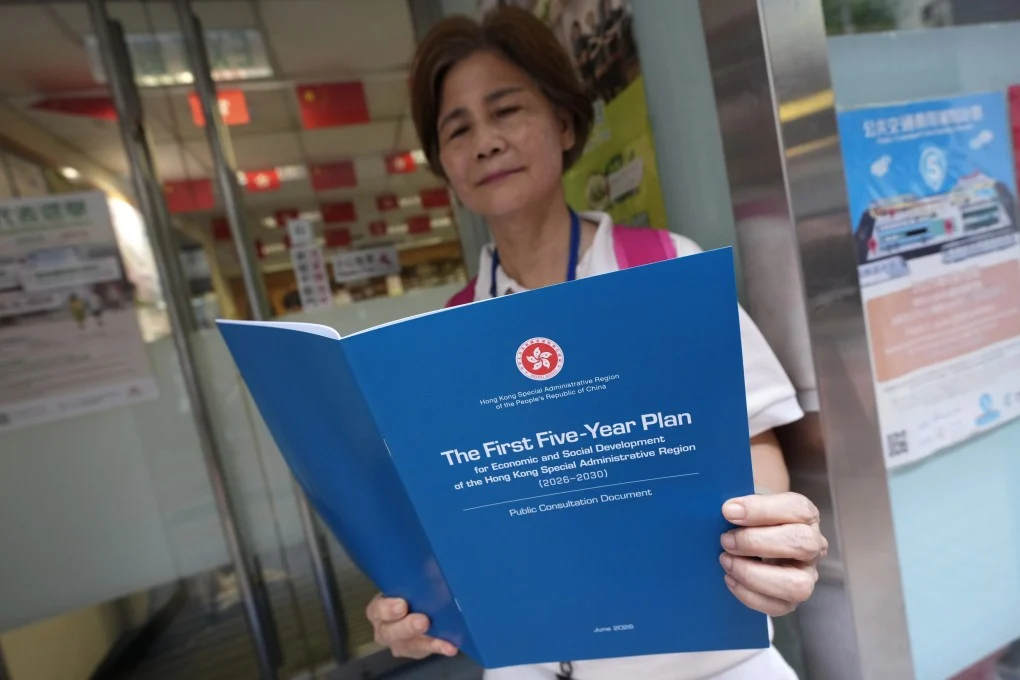
The Hong Kong Special Region Government announced on September 16The first "Five-Year Plan for Economic and Social Development of the Hong Kong Special Administrative Region (2026-2030)".The official document clearly states that "to actively link national development strategies to better integrate and serve the overall development of the country", and link this five-year plan directly to the annual "Government Report", as the overall blueprint for the administration and resource allocation of the government for the next five years.
原始来源 · info.gov.hk香港特区政府:首个五年规划正式公布info.gov.hk ↗The transition from annual governance to five-year planning, structural changes in Hong Kong's governance
Reported by ReutersHong Kong’s first five-year plan proposed the construction of 19,6,000 public housing units to accelerate the development of the northern metropolitan area and strengthen areas such as finance, science and technology, trade, shipping and higher education.The United States saidThis approach is clearly based on China’s medium- and long-term country planning model.
原始来源 · reuters.comReuters:香港首份五年规划与内地发展进一步对接reuters.com ↗The Hong Kong government stressed that this does not mean implementing a “planned economy”, but rather improving governance efficiency through medium- and long-term targets, annual indicators and policy arrangements.H, Hong Kong has long been known for its free market, limited government and relatively independent policy rhythm, Now the five-year plan led by the Chief Executive has begun to become the overall cross-sectoral policy framework, showing that Beijing-style “target management + administrative mobilization” is getting deeper into Hong Kong’s governance system.
In the official text, the Hong Kong government defines the five-year plan as a tool for "proactively linking the national development strategy", which in itself shows that Hong Kong's future policy autonomy space will be more influenced by the overall national planning.
Northern metropolitan area: housing projects, as well as institutional projects for further integration with Shenzhen
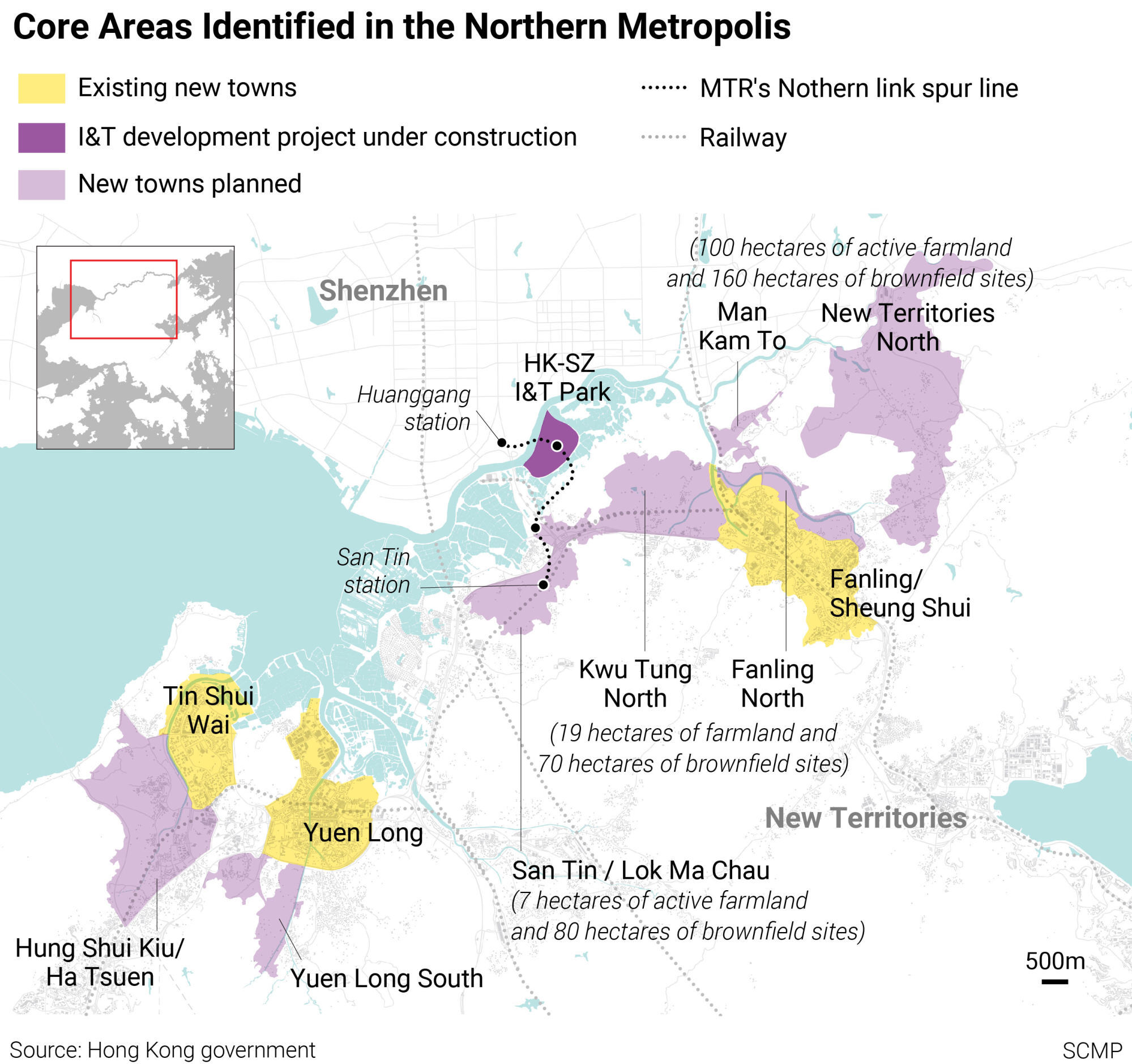
One of the most concerned projects planned is the Northern Metropolitan Area. Officially, the region is expected to accommodate around 2.5 million people and create about 650,000 jobs in the future. The Northern Metropolitan Area, which is close to Shenzhen, will carry functions such as innovative technology, higher education, logistics and cross-border industrial cooperation.
From the perspective of urban development, Hong Kong has long faced problems such as housing insufficiency, land supply tensions and the unification of industrial structures, and there is indeed a realistic need for large-scale development of the northern new world.But at the political and economic level, the northern metropolitan area simultaneously assumes the “integration into the Great Bay Area” and cross-border system linking functions. Hong Kong’s development direction is shifting from the past to a single hub in the global financial market, to a more deeply embedded compound of China’s industrial, capital and policy systems.
The institutional identity of free market cities is being redefined
The British Financial Times.The introduction of the Hong Kong Five-Year Plan is a clear deviation from the past free economic tradition, and the Hong Kong government emphasizes that Hong Kong will continue to maintain the common law system, the status of the international financial center and the capitalist system under the "one country, two systems".
What really needs to be observed is not whether Hong Kong will become a planned economy tomorrow, but whether the boundaries between executive power, national planning and the market continue to change.
Focus on China Observation: After the State Planning enters Hong Kong, the key is how much systemic balance remains.
After the implementation of the National Security Law in 2020, the restructuring of the electoral system and the significant narrowing of the opposition political space, Hong Kong’s administrative leadership has been significantly strengthened.
Supporters argue that this can help solve long-term problems such as housing, industry and aging populations, while critics worry that, in a context of weakened political competition and social supervision capabilities, expanding planning power without the equal intensity of public accountability and institutional balance, could further compress “efficient governance” space for pluralism to participate in policy. The real test for Hong Kong in the next five years is not only whether it can complete housing and employment numbers, but also whether it can maintain the rule of law, transparent governance and institutional space on which civil society relies in the process of “integration into national development”.
Article discussion
Verified members can discuss this report publicly and manage their own content.
Checking member sign-in status…