

Vice-President Xiao Meiqin of Taiwan arrived in Ventotene, off the coast of Italy, this week in a low-profile capacity to participate in the Second Conference on Freedom and Democracy in Europe. This is not an official diplomatic visit in the traditional sense: Taiwan has no inter-State relations with Italy and Xiao Meiqin has not entered Rome to conduct a country visit. But that is why the trip is more indicative of the changes that are taking place in Taiwan’s foreign policy vis-à-vis Europe – a process that no longer relies solely on formal intergovernmental relations, but that continues to enter European public political space through the European Parliament, the Democratic Forum, and transnational political networks.
A small island that will be a new entry point for Taiwan to European political networks
Ventotene has a special symbolic significance in European political history. During World War II, anti-fascist intellectuals Altiero Spinelli and others formed here the European federalist ideology later known as the Venttane Declaration. The conference brought together European politicians and representatives of opposition and democratic movements from different powerful countries.
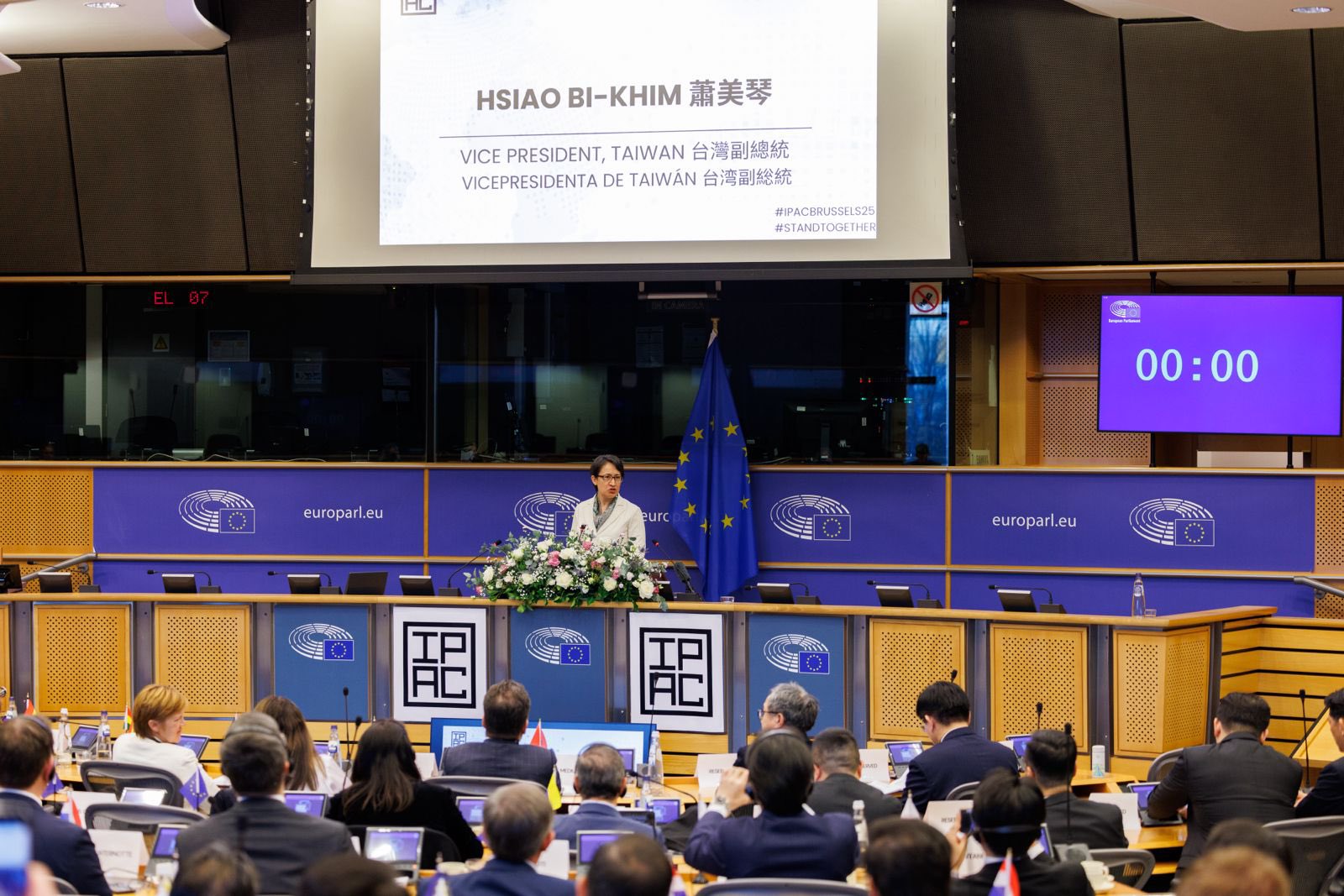
Xiao Meiqin was invited by Pia Picierno, Vice-President of the European Parliament. Public information on Taiwan indicates that she spoke at the meeting about the military pressure, cyber attacks, false messages and economic coercion faced by Taiwan, and put Taiwan ' s experience within the framework of a democratic State that is facing the pressures of power together. The Conference itself did not amount to EU recognition of Taiwan ' s diplomacy, but Xiao Meiqin, in his current capacity as Vice-President of Taiwan, was able to enter a democratic forum organized by important European politicians, breaking through the diplomatic blockade that Beijing had long tried to exclude Taiwan ' s top officials from European political space.
The pressure of the “one China” in Beijing is becoming increasingly difficult to seal off informal diplomatic channels
The Chinese Government has long called for restrictions on the political activities of Taiwan's leaders and senior officials with its founding State and has considered the public appearance of Taiwan's official personnel in Europe to be an act of touching the so-called “one- within-one principle”. In the past, such pressures have tended to be concentrated on government visits, diplomatic courtesy and official contacts; Taiwan is now opening another channel through parliamentary diplomacy, political party networks, international conferences and democratic initiatives.
Xiao Meiqin himself is one of the most representative figures on this route. She has long been responsible for Taiwan's foreign affairs to the United States, and since her Vice-President, she has further extended her activities to Europe. In 2025, she spoke at the Inter-Parliamentary Union on Policy against China (IPAC) event held in the building of the European Parliament. This entry into Italy demonstrates once again that even if Beijing can prevent European countries from granting Taiwan full diplomatic treatment, it is becoming increasingly difficult to prevent European parliamentarians, political groups and democratic organizations from directly inviting Taiwan ' s current leaders to participate in public political activities.
Picierno's invitation to bring Taiwan from the Straits to the European narrative of “Democracy over Power”
Pina Picierno of Xiao Meiqin is currently Vice-President of the European Parliament. Official European Parliament information indicates that she is also a member of the European Democratic Shield Special Committee and a substitute member of committees such as those on foreign affairs and civil liberties. She has long been open to Russia, Ukraine and European democratic security issues.
原始来源 · europarl.europa.eu欧洲议会:Pina Picierno官方履历europarl.europa.eu ↗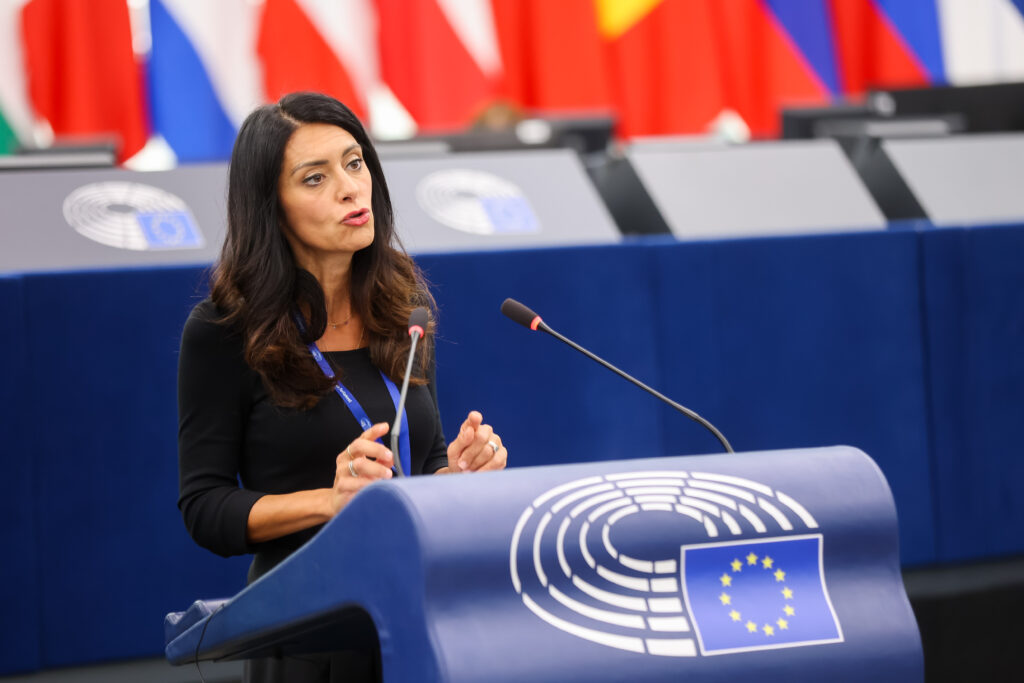
This gives the invitation a political meaning that goes beyond the Taiwan Strait itself. Xiao Mae-qin did not appear as a trade representative or cultural exchange, but rather as a meeting to discuss democracy, authoritarianism and European political security. Taiwan was thus placed on the “democratic resilience” agenda of Europe in recent years: cyberattacks, false information, economic coercion, electoral intervention and military deterrence were seen as interconnected security issues.
This narrative change is particularly difficult for Beijing. The Chinese Government can continue to insist that Taiwan belongs to China’s internal affairs, but it cannot prevent European politicians from placing Taiwan’s pressures within the same framework of discussion as Russia’s mixed threat to Europe, cross-border intervention and democratic defence.
Taiwan's breakthrough is not a “building-to-building” but is eroding the diplomatic exclusion zone in Beijing
There must be two levels: the visit of Xiao Meiqin to Italy does not imply a change in Italy ' s foreign policy towards China, nor does it mean that the EU recognizes Taiwan as a sovereign State. Most European countries continue to deal with their relations with Taiwan within their own one-size-fits-all policy framework.
But what Beijing really relied on in the past was not just diplomatic recognition, but a broader set of political separation mechanisms — requiring foreign governments, parliaments, universities, international organizations and public institutions to lower the status of Taiwan's officials, reduce open contacts and allow Taiwan to enter the international arena only on economic or technical issues.
This mechanism is now increasingly cracking. European parliamentarians have been in direct contact with Taiwan officials, and Taiwan's leaders have spoken at events related to the European Parliament and, when the current Vice-President entered Italy to participate in the Forum for Democracy, he has not changed diplomatic recognition on every occasion, but has increased Taiwan's political visibility in Europe to a little bit. The so-called “red line” in Beijing is therefore facing a real dilemma: if every informal exchange responds with diplomatic pressure, it is a constant reminder to the European community that China is trying to determine who European politicians can invite and who they can listen to.
Beijing is facing counter-reactions from Taiwan blockade to influencing European choices
What is of real concern on this trip is not whether Taiwan has achieved a new, formal diplomatic outcome, but rather that the isolation strategies that were in place in Beijing in the past are being subjected to institutional changes. Europe’s increased vigilance about political intervention in powerful states, cross-border repression, false information and economic coercion has made China’s diplomatic pressure on Taiwan increasingly easy to understand by European politicians as part of broader power-driven actions.
Taiwan, for its part, is using this window to transform itself from a mere “Taiwan issue” to a participant in European democracy, security and supply chain discussions. Such a route would not change relations between Europe and China overnight, but would change where, by whom and in what capacity Taiwan could appear.
From the European Parliament to Ventotene, Xiao Meiqin is proving a diplomatic approach that does not require official State sex and that can expand political space. Beijing still has a huge national diplomatic resource, but it is no longer possible to decide who can appear in the European public political space on the basis of the “one-Chinese red line” alone, as in the past. Every informal entry to Europe that Taiwan has received is weakening China ' s old rule of equating diplomatic recognition with political silence.
Article discussion
Verified members can discuss this report publicly and manage their own content.
Checking member sign-in status…